
Can you help spot marine non-native species in your local area?
For a number years, Shetland UHI has been looking for and keeping records of marine non-native species arriving in Shetland.
Non-native species are those which come from elsewhere in the world and have become established here, usually transported on hulls of boats or ballast water. In the past, species were also transported with shellfish aquaculture when novel species were brought into and trialled across Europe (back in the 1960-1980s). Shetland UHI has been monitoring ports and marinas since 2012, as this is usually where species enter first.
We have found that, compared to elsewhere in the UK, Shetland has relatively few non-native species, perhaps reflecting Shetland’s cooler waters, making it harder for some species to colonise.
However some INNS have been found in Orkney and Norway and can compete with native wildlife and smother aquaculture structures which have caused economic impacts elsewhere in the UK. It is therefore important that we monitor hotspots such as piers and marinas to record and findings of INNS and implement an eradication strategy.

Get involved
Help report non-native species or unusual sightings!
We have created a INNS and Indicator Species Guide to help you identify marine non-native species.
These are species either found in Shetland or likely to arrive soon. Reporting novel species quickly helps us implement management or removal procedures if needed, and keep the number of INNS in Shetland low.
Species we would be particularly interested in records of are the Compass Sea Squirt (Asterocarpa humilis), the Orange-tipped Sea Squirt (Corella eumyota) and Wireweed (Sargassum muticum).
Download our INNS Guide here…

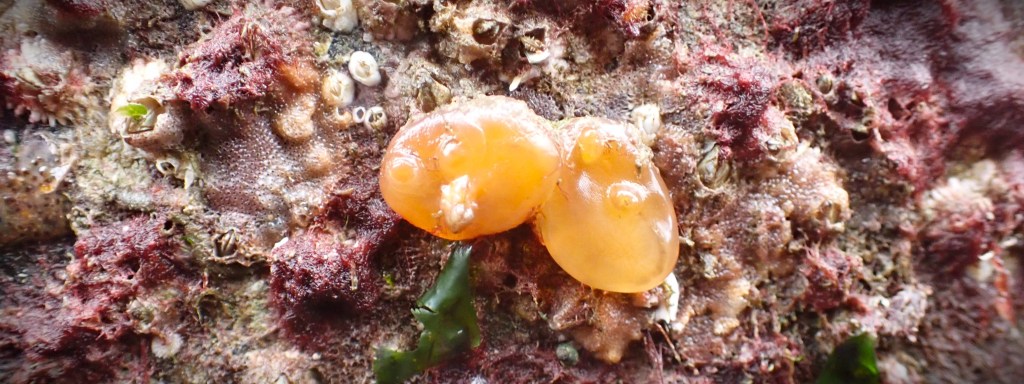
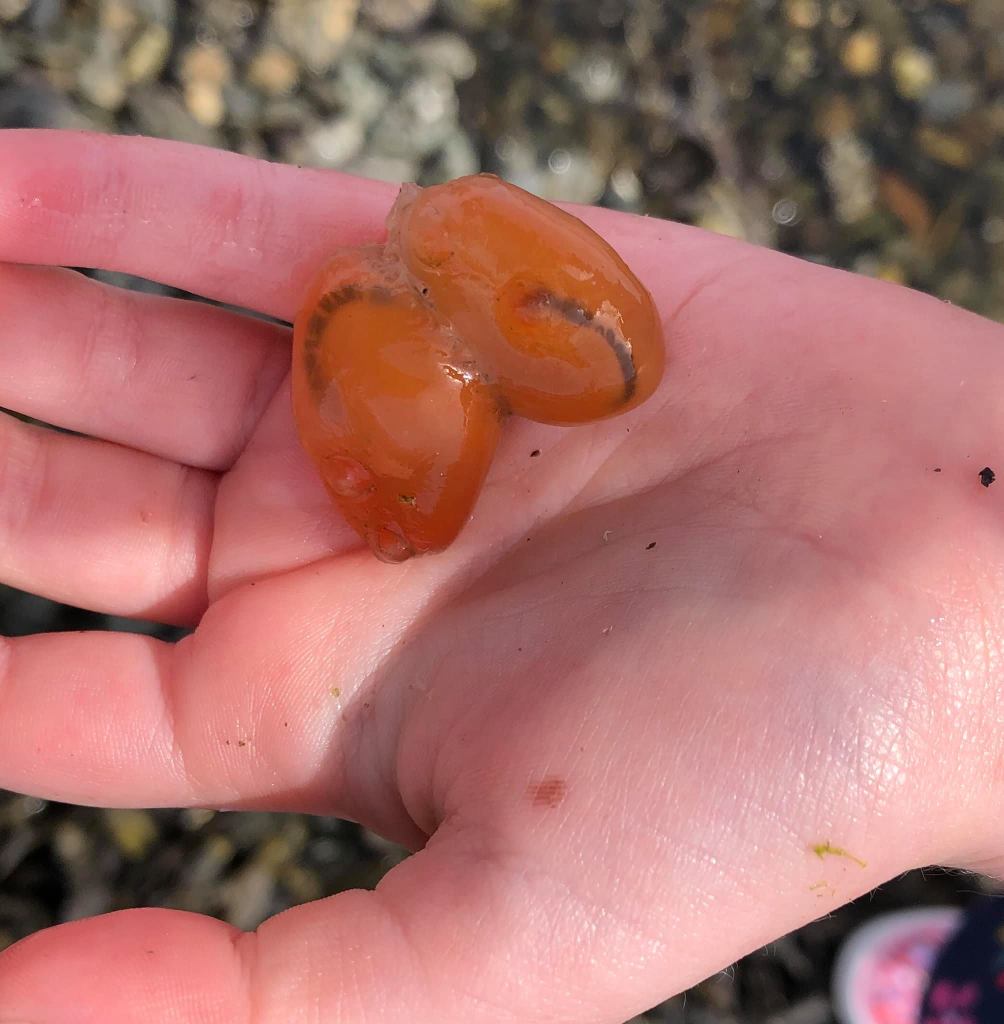
Orange-tipped sea squirt
Lisa Humphray recently spotted the non-native Orange-Tipped Sea Squirt in Scalloway harbour while turning over rocks on the beach. This is only the second time it has been found in the ‘wild’ in Shetland and indicates it may be spreading beyond marinas and harbours.
We’d be really interested to hear if anybody else finds it, as it would help us to understand how fast it is spreading around Shetland. It loves living right at the bottom of the shore and under rocks. At marinas it may be found on the underside of floats and buoys.
Wireweed
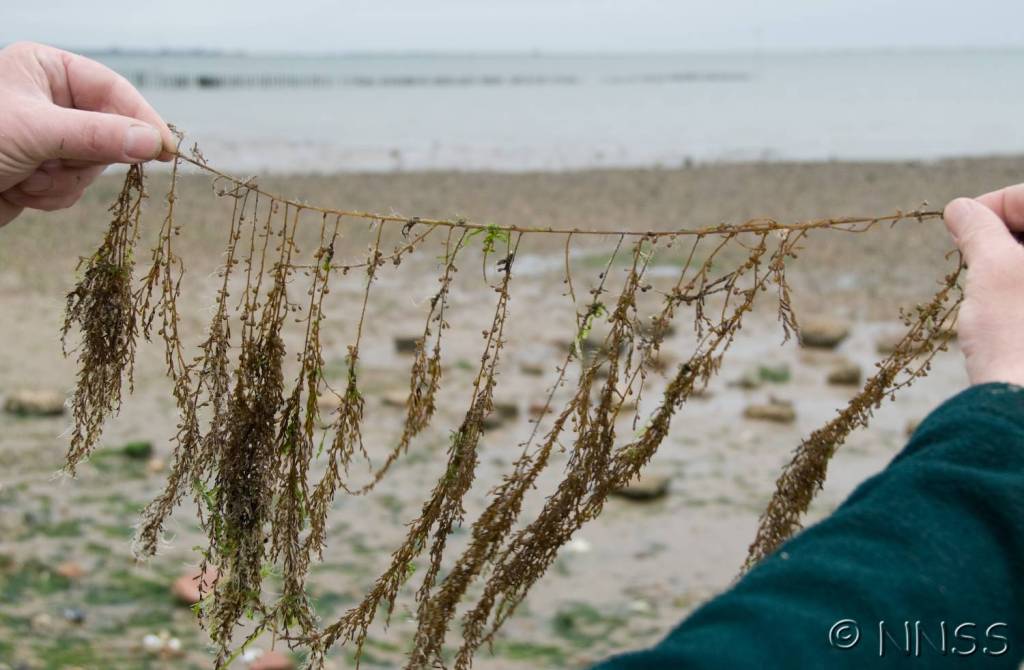
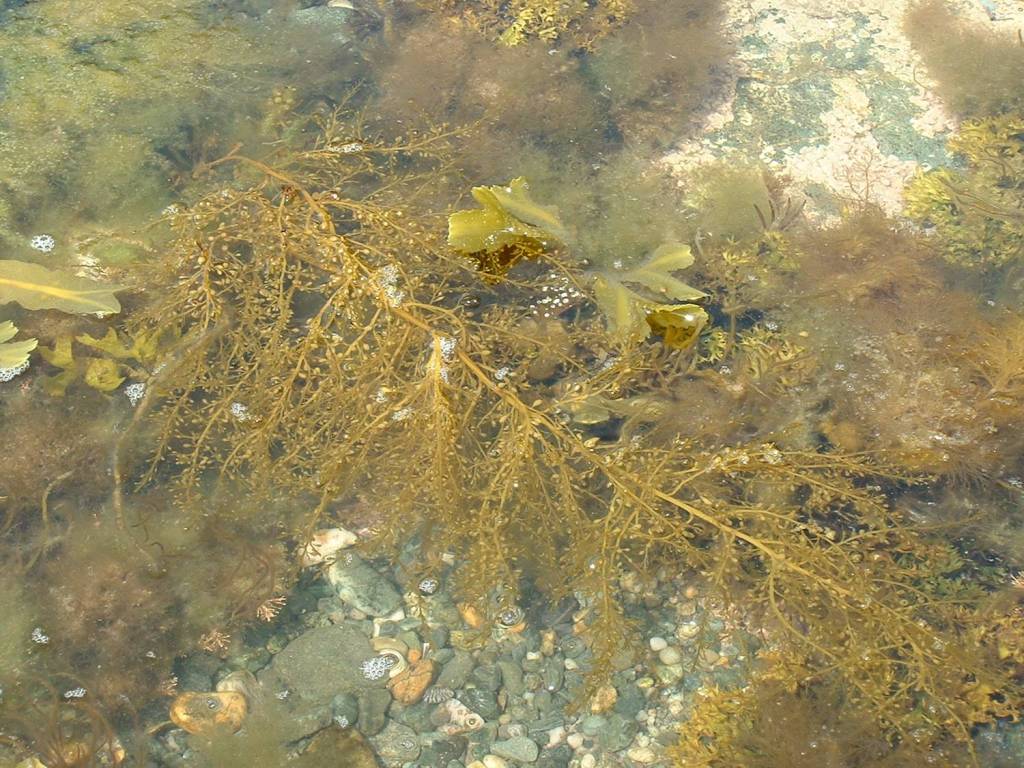
The second species we’d like you to look out for is Wireweed. It has been spotted twice in Orkney but hasn’t yet managed to become established. It can drift long distances in the current, so could easily make it to Shetland too. In Orkney it was found in the ‘wild’ rather than at a marina. Once established it can grow rapidly, clogging boat propellers and smothering our native animals.
Help prevent new arrivals
We can all help prevent the spread of non-native species.
Checking that kit, boats, and clothing is cleaned and washed down before you move around is really important – especially if you are moving on or off Shetland, or moving between islands.
Find our more in the Shetland Biosecurity Plan.

Find out more
For more information have a look on Shetland UHIs webpage on non-native species here.
Find out more in our blog series from INNS Week 2022:
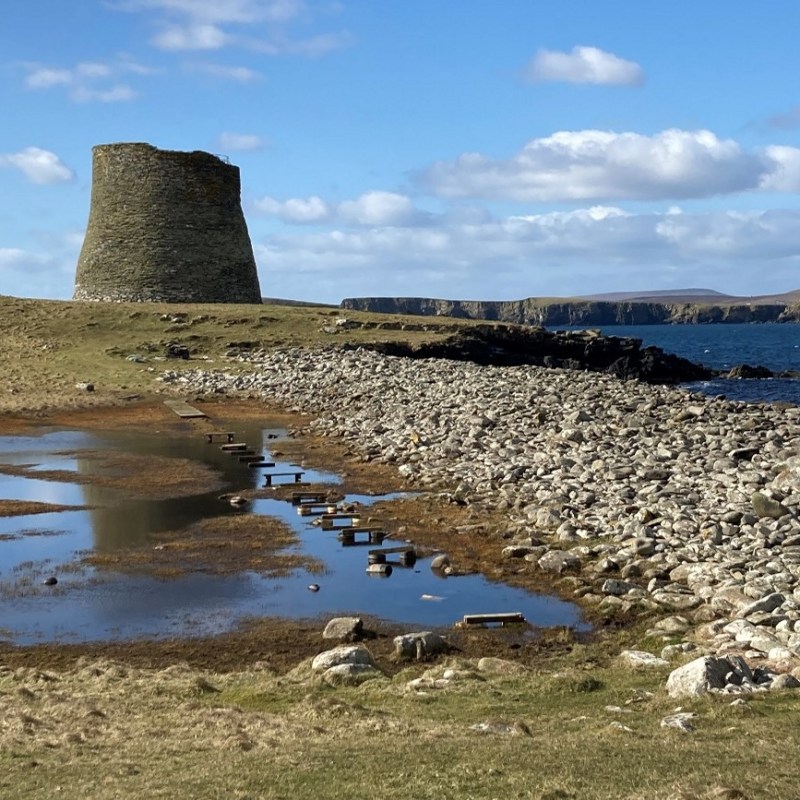
Mousa Biosecurity Trail
Guest blog from Holly Paget-Brown, Biosecurity for LIFE At Biosecurity for LIFE we are working hard to raise awareness of the threat of invasive predators…

Introduced animals in Shetland
Guest blog by Paul Harvey, Shetland Amenity Trust Yesterday we considered a few invasive plants that have the potential to wreak havoc among our native…

Introduced Plants in Shetland
Guest blog by Paul Harvey, Shetland Amenity Trust Around a third of the species of flowering plants that one might come across in the Shetland…

Monitoring marine non-natives at UHI Shetland
Today we’re exploring the species that get moved around across oceans and continents to be introduced to our coastal seas. As the world becomes increasingly…

Welcome to INNS Week!
This week is the UK’s Invasive Species Week which aims to raise awareness of the issues that invasive species can cause and of the work…
 Shetland Community Wildlife Group